The Grey Lady
I’m not sure whether this counts as Leeds or not, but in Fulneck School, Pudsey (est. 1753, so plenty of opportunities for ghosts and such) there was a popular rumour/legend about a ghost named the “Grey Lady”. The teachers often said that it originated from some old wedding photo that was messed up by some six formers not that long ago (though considering the age of the teachers, “not long ago” was probably the 60s or 70s, at the latest) – but it was always she who was credited when all the lights in a room suddenly went off, and then came back again a panicked few seconds later, and I always suspected that that black cat which could often be seen wandering the corridors and gardens had some connection to her…
There are many other strange things about that place, though I never thought that anyone other than me remembered most of them. And I know that this is very recent, but a few nights ago a boggart, or something like it, (I believe they were called will-o’-the-wisps in the dream, as I couldn’t remember the name) managed to trap me inside a dream-room, and it was only by remembering how to defeat it (it was impervious to physical harm) that I was able to wake up from the dream and the sleep. This experience continues to fascinate and disturb me, as it managed to be simultaneously a dream and not a dream… A bit like the tree thing in Totoro, I suppose. 🙂
Jordan S.
Temple Mill

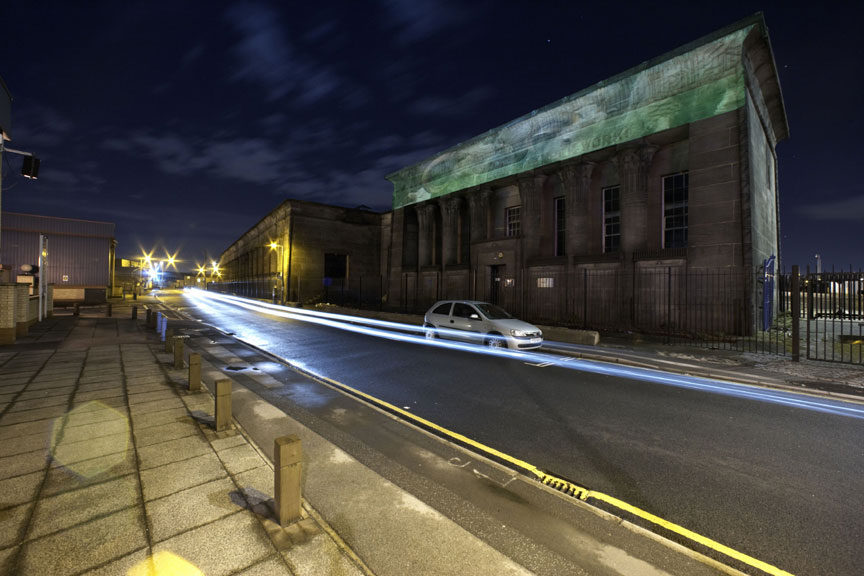
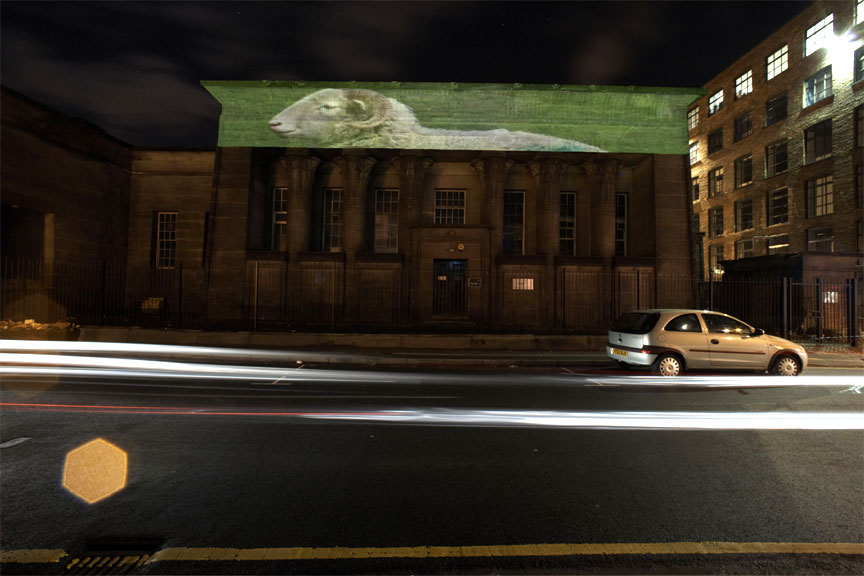
In the heart of Holbeck Urban Village lies an extraordinary building: a direct copy of the temple to Horus at Edfu. The Temple Mills (1838 — 43) were designed by Eqyptologist and architect Joseph Bonomi Jun for John Marshall, founder of the Leeds flax industry and an entrepreneur of the industrial revolution.
Temperature and humidity are very important to the flax industry. To prevent rainwater penetrating the flat roof, the roof was covered on the outside with plaster, tar, earth and grass to insulate it and it is said that a flock of sheep grazed upon the grass. This bizarre story of sheep being kept on its turf roof is well rooted in local folklore…apparently one of them fell through a skylight killing one of the workers below! How more surreal a juxtaposition could one imagine than sheep grazing on the roof of a dark Satanic mill posing as an Egyptian Temple?
Urban myth or not, this anecdote evokes an incongruous vision that symbolises the historical tension between the urban and rural landscape. The workers who initially stoked the fires of the industrial revolution came flocking from the countryside and these low paid agrarian labourers, searching for income in the newly industrialised towns, were soon crowded into areas like Holbeck and Leeds. Those lofty sheep will have had a particular resonance for them as they trudged into work to start a gruelling 72-hour week.
Two hundred years later, digital media artist Andy Wood created a site-specific installation that you could have happened upon much like the original sheep. Comprising a video projection onto the top of the building of sheep grazing with a supporting rural-esque soundscape, it was a subtle intervention with an atmosphere of the past and a suggestion of the murky history of this grand monument to the industrial revolution.